The Sideboard’s Journey from Storage to Room Anchor
Sideboard history connects practical dining storage with today’s flexible rooms. Learn how its form evolved and choose a piece suited to your home.
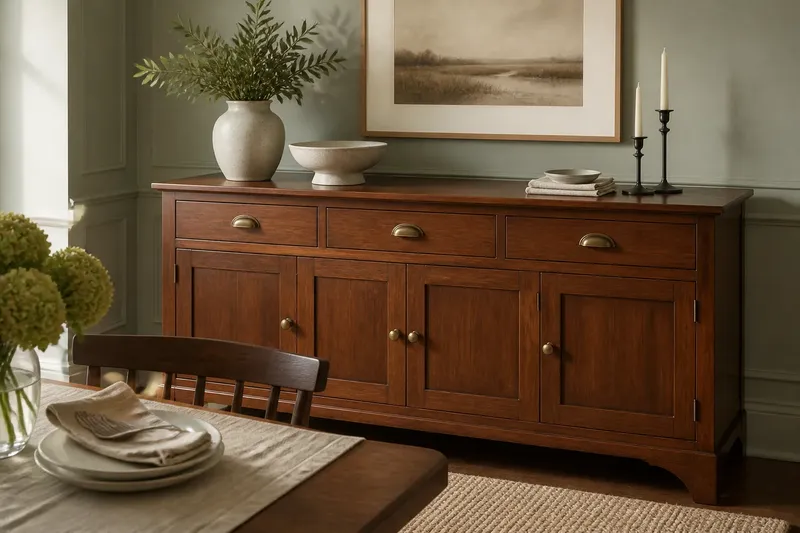
After supper, a dining table is cleared of serving bowls, but the dishes still need a home and the wall beside the table remains bare. A sideboard can answer both needs. Its history is less a neat march from cupboard to ornament than a record of changing ways to serve food, store household goods and furnish rooms.
Sideboard history begins with the dining room
The name describes furniture set beside a wall, but the form developed through practical dining-room tasks. A table-like surface gave people room to arrange dishes and serve food; drawers and cupboards, where included, kept linens, utensils and serving pieces close at hand.
There was no single design that appeared everywhere at once. Sideboards have varied with local furniture traditions, household means and available materials. Some were comparatively plain tables, while others joined a broad top to drawers, doors or decorative supports.
That combination explains the form’s lasting appeal: the top is useful in view, while the space below can keep objects out of sight. The historical point is not that every sideboard followed the same path, but that serving and storage often met in one piece of furniture.
Changing dining habits made the form adaptable
As rooms and routines changed, the sideboard was not confined to formal dining. Its horizontal surface and enclosed storage could also suit a living room, hall or work space. The furniture’s purpose shifted with its contents, even when its basic arrangement remained recognisable.
This flexibility helps explain why present-day pieces can look quite different from one another. A cabinet with drawers may emphasise storage, while a legged design may make a room feel more open. Neither is the definitive historical form; each reflects a different balance between practical use and visual presence.
In a Southern home, a sideboard might sit in a dining room used for everyday meals as well as gatherings. Its role can be shaped by the room’s routines rather than by a fixed idea of formality.
Choose a sideboard by the work the room needs
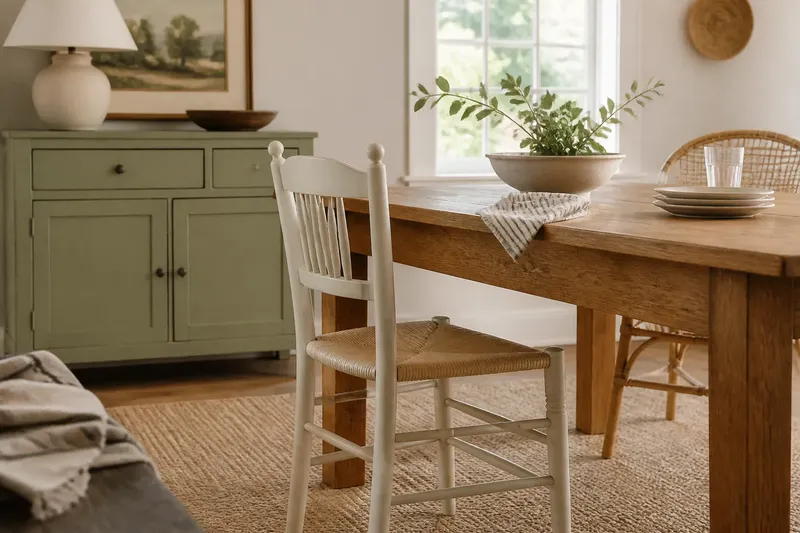
In a dining room, decide what needs to be stored near the table. Drawers suit smaller items such as napkins and cutlery; cupboards accommodate larger dishes and serving bowls. A clear top can serve food or provide a temporary place to set things while laying the table.
In a living room, the same piece might hold books, games or media accessories, with a lamp or framed picture on top. If the room already has open shelving, closed storage may be more useful than another place for display.
In a hallway, consider the objects that tend to collect near the door. Drawers can hold keys and correspondence, while cupboards can conceal bags or household supplies. If the cabinet would obstruct the route, a narrower console may be a better fit.
Say you have a dining room used for weekday meals and occasional gatherings, and serving dishes currently sit in a kitchen cupboard. You choose a sideboard with cupboards for the dishes and drawers for napkins; the expected result is that meal items are close to the table while the table itself stays clear between uses.
Read the furniture’s form before choosing its place
A sideboard’s features offer clues about how it will work. A long, low body can anchor a bare wall, while a compact cabinet may supply storage in a room with limited space. Look at the actual construction and use rather than relying on a shop label.
- Inspect the top: If it is broad and uninterrupted, then it can support serving or display; if it is divided or awkwardly shaped, then consider a piece with a clearer surface instead.
- Check the storage mix: If you need to organise small items, then choose usable drawers; if you need to store bulky dishes, then prioritise cupboards or choose a combination.
- Notice the base: If seeing more floor would help the room feel less crowded, then consider a legged design; if you want the furniture to read as a substantial anchor, then a solid base may suit better.
- Test the door arrangement: If hinged doors would conflict with nearby furniture, then consider sliding doors; if you need the whole cupboard opening accessible at once, then hinged doors may be more suitable.
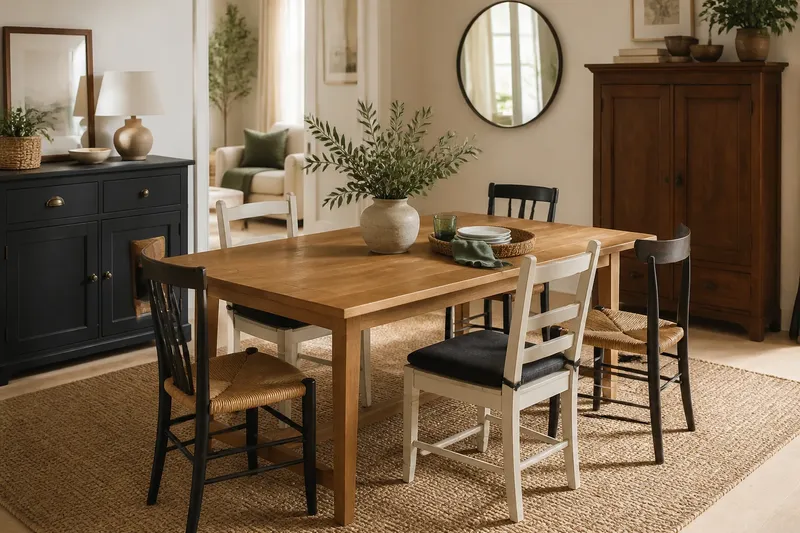
- Look at the finish and details: If nearby furniture has varied shapes and materials, then a restrained finish may sit more quietly among it; if the room is simple and needs a stronger focal point, then more distinctive detailing may fit.
- Consider the contents: If your dishes or objects need shelves or a particular interior arrangement, then check that the cabinet provides it; if the interior does not suit them, then choose another piece or plan a different use.
The terms sideboard, buffet, console and cabinet can overlap in household speech and shop descriptions. A console is often narrower and offers less enclosed storage, while a sideboard commonly combines a usable top with drawers, cupboards or both. Judge the form and its purpose, not just the name.
How should you choose a sideboard for your room?
Can a sideboard work outside a dining room?
Yes, when the room needs a low surface and enclosed storage. In a living room it might hold games; in a hall it might collect everyday items, provided it does not obstruct the route.
Are drawers or cupboards better for a sideboard?
Drawers are useful for smaller objects that are easier to sort than stack, such as napkins or stationery. Cupboards suit larger objects, and a combination can accommodate both kinds of contents.
Can an older sideboard suit a contemporary room?
Yes. Let the older piece provide a contrast, then repeat one of its colours or materials elsewhere in a modest way if you want it to feel connected to the rest of the room.
What is the difference between a sideboard and a console?
A console is often a narrower surface with little enclosed storage, while a sideboard generally has a top as well as cupboards, drawers or both. Because the terms are not used consistently, compare the actual shape and storage.
Let the sideboard’s history inform its present use
Sideboard history is useful because it shows how one furniture form can join a working surface with storage, then adapt to different rooms and routines. When choosing a piece, begin with what needs a home and where the furniture will sit; its appearance can follow from those decisions.
Imagine a household whose dining table is regularly covered with serving bowls and folded linens. They list those items, sort the bowls as cupboard contents and the linens as drawer contents, then compare that list with a sideboard’s interior. If the cupboards fit the bowls and the drawers suit the linens, the piece answers both needs; if its interior offers only shallow drawers, they would need another storage plan or a different cabinet.
That close attention to use is what lets a sideboard become part of a room’s arrangement rather than simply another cabinet against a wall.