Painted Wood or Visible Grain: What Each Finish Brings to a Room
Painted wood or visible grain can change a room’s mood and upkeep. Compare colour, texture and wear to choose a finish that suits the piece.
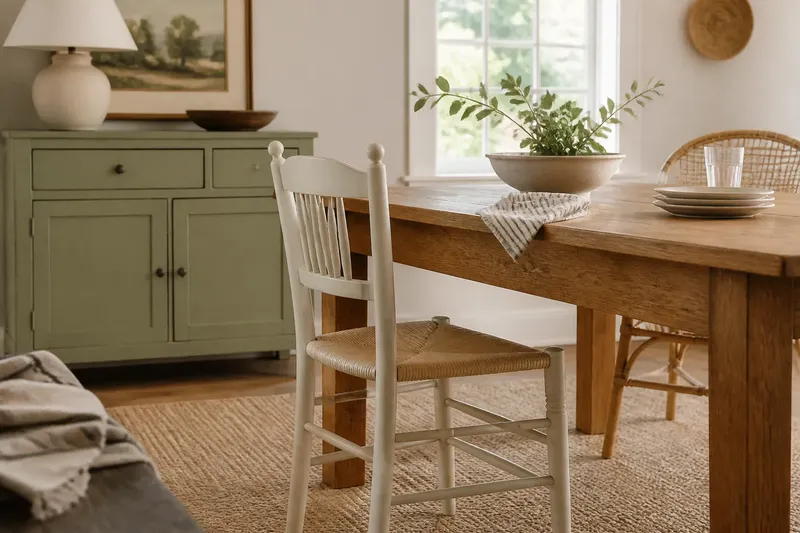
A painted pine chair beside a scrubbed oak table can make a Southern dining room feel collected rather than coordinated. Choosing between painted wood or visible grain is not just a colour decision: each finish changes how a piece sits in the room, what details stand out and how wear is likely to show.
Think about the furniture’s shape, its place in the room and the care you are prepared to give it. These six considerations can help you decide without treating either finish as a universal rule.
1. Let the furniture’s shape lead the choice
Paint can quiet a busy outline. On a turned chair, carved bedstead or cabinet with applied moulding, one even colour brings the contours together, so the silhouette reads before the small details. This can be useful when a room already contains patterned curtains, woven rugs or several distinct pieces of furniture.
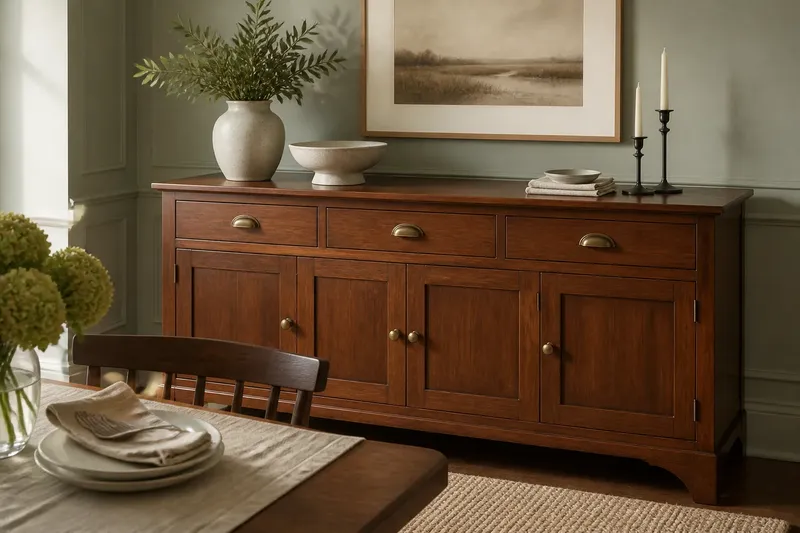
Visible grain gives the surface a more varied character. Grain lines, knots and changes in tone draw the eye across the wood, which can make a simple table or plain chest feel more expressive without adding ornament. On highly detailed furniture, that same variation may compete with carving rather than clarify it.
Stand back and ask what you want to notice first: the outline, the carved work or the wood itself. Choose a finish that supports that feature instead of asking every feature to command attention.
2. Use colour to set the room’s visual weight
A painted surface can connect furniture to other colours in the room. A muted green cupboard might echo a garden view; a warm cream chair might sit comfortably beside plaster walls and a rush-seat bench. The colour need not match another object exactly. A related undertone can be enough to make the arrangement feel considered.
Exposed wood contributes colour too, but its range comes from the timber and its finish rather than a chosen hue. Honeyed pine, reddish cedar and cooler brown oak each affect how nearby fabrics and wall colours appear. If the room already has several strong colours, a quieter wood surface can offer relief; if the palette feels flat, visible grain may introduce useful variation.
Check a finish sample beside the actual wall colour and upholstery, rather than judging it alone. Daylight and lamplight can shift how both paint and timber read.
3. Treat grain as a surface with its own character
Exposed grain makes the material legible. You can see the direction of the boards and, sometimes, where tones change around knots or joins. This suits a piece whose construction or timber is part of its appeal, such as a broad plank table, a pine dresser or a locally made bench with a straightforward form.
Paint replaces some of that visual information with a continuous field of colour. It can make different boards feel more unified, especially on a piece assembled from timber of mixed tones. It also conceals small variations in the wood, although paint cannot erase dents, loose joints or a rough surface beneath it.
Before choosing, look closely at the existing surface in natural light. If the grain is clear and appealing, a transparent finish may preserve it; if it is patchy in a way you dislike, paint may provide a more even appearance.
4. Match upkeep expectations to how the piece is used
Everyday contact affects finishes differently. A dining chair may collect marks around its legs and back, while a bedside table may meet water rings, cosmetics or a warm mug. Painted furniture can show chips where edges take repeated knocks; exposed timber can show scratches, dull patches or changes in sheen. Neither finish removes the need to wipe spills promptly and use suitable coasters or pads.
Repair also differs in appearance. A small paint touch-up can be noticeable if the original colour has shifted or the sheen does not match. A mark in exposed timber may blend with existing variation, but a more extensive repair can alter the tone or texture around it. Consider whether you would prefer a crisp, uniform surface or a finish that can accommodate visible signs of use.
For a piece used daily, look at its vulnerable edges and contact points before settling on a finish. The likely pattern of wear matters more than the room’s label.
5. Make the finish suit the room’s other materials
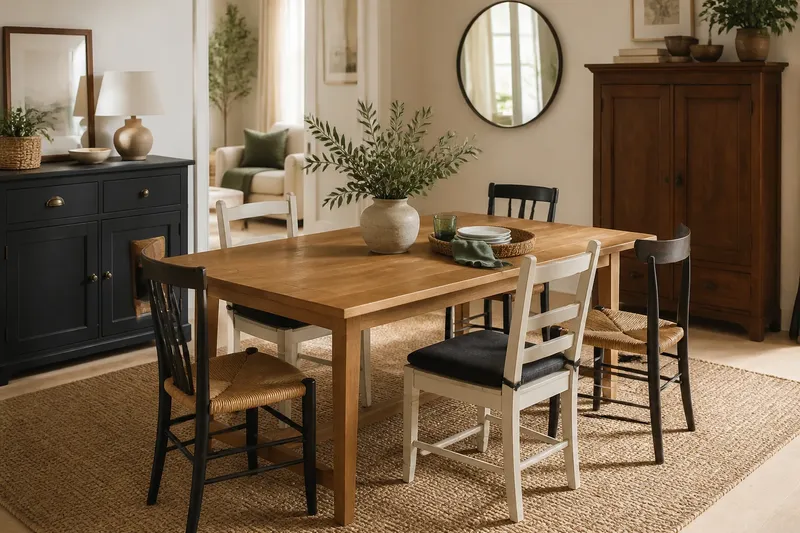
Southern rooms often bring together timber, painted trim, wicker, cotton, stoneware and metal. The decision is less about making every wood surface agree and more about giving the materials distinct roles. A painted cabinet can provide a calm block of colour beside a woven chair, while a visible-grain table can add texture among smooth walls and plain linen.
There is a difference between contrast and clutter. If several pieces already show strong grain, a painted surface can create a pause. If much of the room is painted or upholstered, one wood surface can restore a sense of natural variation. Repeating a finish in a small way—perhaps through a frame or stool—can help it feel intentional without matching a whole suite.
Imagine a room with a dark patterned rug, a painted dresser and a plain pine desk. If the desk’s grain feels like another busy pattern, a restrained paint colour could settle it visually; if the room seems too uniform, keeping the pine visible could bring in a quieter texture. The useful test is the effect on the whole room, not a rule about which finish is more authentic.
6. Ask what the existing surface can reasonably support
A finish should suit the condition of the piece as well as its appearance. Sound timber with an attractive surface may be a good candidate for a transparent treatment. A piece with mismatched boards or old patches may look more coherent painted, provided its joints and structure are sound and the surface can accept the new coating.
Previous coatings complicate the choice. A clear finish over old paint will not restore visible grain, and paint applied over a glossy or flaking layer may not adhere well. For an antique, a valuable family piece or a surface with unknown coatings, ask a furniture conservator or qualified refinisher before altering it. For routine products, follow the manufacturer’s instructions and local requirements.
Try a sample on an inconspicuous area when the piece’s condition allows, and assess it after it has dried. A small patch can reveal whether the colour, sheen and grain treatment suit the wood better than a guess made from a tin or catalogue image.
Which finish suits this piece and room?
Does paint hide damage in wood?
Paint can conceal colour differences and minor visual irregularities, but it does not repair structural faults or make an uneven surface sound. Dents and rough patches may remain visible unless the furniture is properly prepared.
Can visible grain work with patterned fabrics?
Yes, if the grain reads as a restrained texture rather than another strong pattern. Keep the surrounding colours and shapes in view, and consider whether the timber draws attention away from the fabric or helps balance it.
Which finish shows everyday wear more?
It depends on the furniture, the coating and the way it is used. Paint may chip at exposed corners, while clear finishes may develop scratches or changes in sheen; inspect the piece’s likely contact points and decide which marks you would find easier to live with.
Can a painted piece be changed to show its grain?
Sometimes, but removing paint can be difficult and may expose timber that was never intended to be seen. The underlying wood, old coatings and the piece’s value all matter, so seek a qualified refinisher’s advice before attempting a major change.
For painted wood or visible grain, the most useful choice is the one that lets the furniture do its best work in the room and asks for a kind of upkeep you can accept. Look at the piece in its usual light, notice where hands and objects meet it, and choose for those real conditions rather than an idealised finish sample.