The Matching Furniture Set Myth: Make Different Pieces Feel at Home
The matching furniture set myth need not dictate your room: repeat a finish or shape to connect existing pieces and choose a mix that feels settled.
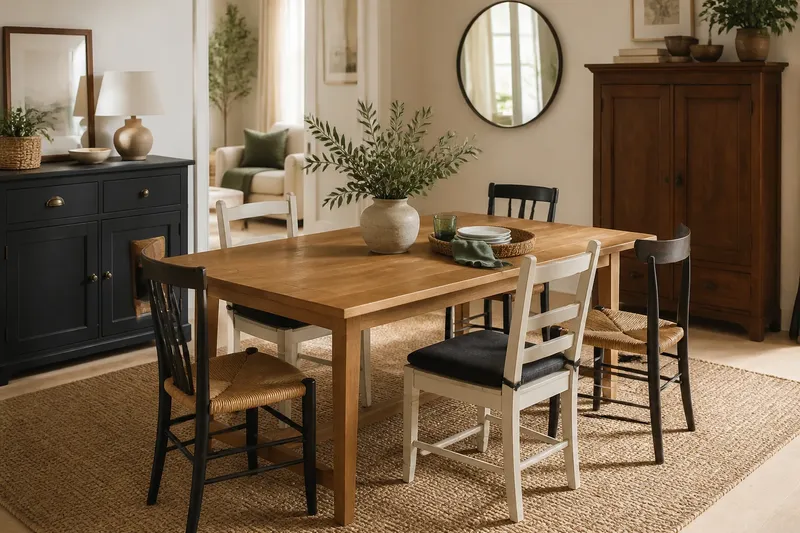
You inherit a honey-coloured dining table, then find four chairs with dark legs and woven seats. The pieces work in their own ways, but together they can look like an accident—or like a room taking shape. The matching furniture set myth says every item must belong to one collection; in practice, a few repeated visual cues can give different furniture a shared purpose.
This matters in Southern homes, where a room may hold family pieces, market finds, hand-me-downs and newer furniture at once. Matching can bring calm, but it is only one route to coherence. The more useful question is what the pieces have in common, and which difference you want to keep.
Matching furniture sets solve one problem, not every problem
A coordinated set offers instant continuity. When a bed, bedside tables and chest share a finish and design, the room has a clear visual centre and little decision-making is needed. This can suit a small room, a first home or someone who prefers a composed, low-contrast look.
The limitation is that a full set can make each piece seem less distinct. A dining room may feel as though it arrived in one delivery, even if the table is useful and the chairs are comfortable. That is not inherently wrong; it is simply a particular look, rather than a requirement for a finished room.
There is also a practical reason to mix. A household may already own a sturdy table but need chairs that tuck beneath it, or may find a cabinet with better storage than the matching one on offer. Treating the set as an option rather than a rule leaves room for those decisions.
Repeated cues make mixed furniture feel deliberate
A visual cue is a feature the eye can recognise across separate objects. It might be a wood tone, a rounded edge, a dark metal detail, a woven texture or a similar degree of visual weight. Repeat one or two cues and let other features vary: a round mirror can echo a table’s curved corners without copying its finish.
Start by looking at the furniture already in the room, not by choosing a style name. Note what appears more than once, then decide which feature is strong enough to repeat. If the dining table has a warm timber top and black iron stretcher, for example, chairs with dark legs or a nearby black-framed print could connect to it without imitating the table.
Repetition works best when it is visible but not mechanical. Two pieces with the same pale timber can relate even if one is painted and the other has a natural finish; a shared silhouette can link objects whose colours differ. The aim is a recognisable family resemblance, not identical twins.
Pick a cue you can actually repeat with the furniture and accessories you have.
Choose a linking approach that suits your room
There are three useful approaches: repeat a material or finish, repeat a shape or detail, or balance the room through scale and visual weight. Each creates connection differently. Choose the one that works with your existing pieces and the amount of contrast you want.
Repeat a material or finish for a quieter room
This approach suits rooms with several furniture styles but a preference for visual calm. Similar timber tones, a repeated painted colour or recurring brass details can draw pieces together without making them identical. In a sitting room, a walnut side table might relate to a dark timber frame on an armchair, while a painted cabinet remains a distinct piece.
Exact colour matching is not necessary. Wood changes in appearance with grain, age and finish, so a close relationship in warmth may matter more than an identical stain. If one piece looks especially orange beside a cooler brown, a cushion, lamp base or framed picture can help mediate the contrast rather than forcing every timber to match.
Repeat a shape or detail for a more collected look
Choose this when materials vary, or when the room needs a little more character. Rounded corners, spindle legs, woven cane or a simple arch can recur across furniture and smaller objects. A cane-backed chair, for instance, can relate to a basket or a woven tray even when their colours differ.
Keep the repeated shape legible. If every object has a prominent curve, the effect may feel overworked; one or two echoes are often enough. Let the rest of the room provide contrast, such as a straight-lined cabinet beside a rounded occasional table.
Balance scale and visual weight for a room with strong contrasts
This suits a room where the pieces differ sharply in colour, age or style. Visual weight describes how substantial an object appears, which depends on factors such as its size, darkness, solid surfaces and leggy or open construction. A broad, dark cabinet can feel more balanced when paired with a substantial chair or a group of objects that gives the opposite side of the room comparable presence.
Balance does not mean equal furniture on either side. A large sofa can sit opposite a lighter pair of chairs if their combined shapes hold the space. Use this approach when a repeated finish would be difficult to find, but check the arrangement from the doorway as well as from the main seat.
Let the room decide how much matching it needs
The right approach depends on the room’s existing character and how you use it. A bedroom with several family pieces may benefit from a repeated finish that quietens the mix. A dining room assembled over time may feel more natural with repeated shapes, while a sitting room built around a dramatic cabinet may need balance in scale rather than another matching finish.
Say you have a long, dark dining table, two pale painted chairs and two mismatched timber chairs. Imagine choosing dark seat pads for all four chairs, then arranging the painted pair opposite each other and the timber pair at the ends. The repeated seat colour gives the group a shared cue, while the varied frames remain visible; the expected result is a dining area that reads as composed without pretending the chairs came as a set.
That example also shows why placement matters. Repeating one feature can connect furniture more clearly when related pieces sit within sight of each other. If the only matching detail is hidden behind a door or across the house, it will do little to tie the main arrangement together.
Questions to ask before adding another piece?
Do dining chairs have to match the table?
No. Chairs can relate to a table through seat height, shape, material or a repeated detail, while differing in finish or design. Consider how they sit at the table and whether the group feels visually balanced from the room’s usual viewpoint.
Can wood furniture in different tones work together?
Yes, especially when the tones share a quality such as warmth or when another cue links the pieces. Place samples or small objects near the furniture in the room’s normal light, then judge whether the contrast looks intentional rather than distracting.
How many visual cues should a room repeat?
Begin with one, then add a second only if the furniture still feels disconnected. A recurring finish and a recurring shape can work together, but repeating every feature risks making the room feel overly coordinated.
What if a piece does not match anything?
Give it a clear role rather than buying another item to copy it. A distinctive cabinet can act as an accent, or a movable object such as a lamp or cushion can provide a modest link to the rest of the room.
Use a simple edit before buying more furniture
Before shopping, move the pieces into their intended positions and look at the room from its entrance. Identify the strongest furniture item, then decide whether the mix needs a repeated material, a repeated shape or better balance in visual weight. Make one change at a time so you can see what it contributes.
- Name the anchor: Choose the piece that already gives the room its clearest character, such as a dining table, bed or cabinet.
- Spot existing cues: Look for recurring timber warmth, metal, curves, woven surfaces or leg shapes before introducing anything new.
- Choose one linking cue: Select the feature that is easiest to repeat with pieces already owned or readily adapted.
- Check scale: Notice whether the furniture feels too heavy on one side or whether a small piece disappears beside larger items.
- Test the arrangement: Move objects, swap chairs or add a textile temporarily and view the room from more than one position.
- Decide what to leave distinct: Keep a contrasting piece if it adds useful function or a character you want to retain; do not disguise it merely for uniformity.
When an alteration affects an item’s finish or construction, follow the maker’s care guidance and check the product label where relevant. A removable cushion or a change in placement is an easier first adjustment than an irreversible alteration.
The matching furniture set myth is most limiting when it turns a useful room into a shopping list. A set can be the right choice for someone who wants immediate uniformity, while repeated cues or balanced contrast can suit a home that has grown piece by piece. For a mixed room, the matching furniture set myth gives way to a better test: can you point to the detail that connects the pieces, and can you explain why one difference deserves to stay?